Soap may seem like an everyday product, but its history stretches back thousands of years and intersects with culture, chemistry, and public health. Understanding how soap came to be reveals not only the evolution of cleanliness practices but also the ingenuity of ancient civilizations.
What is soap, really?
At its core, soap is a cleaning agent created through saponification, a process where fats or oils react with an alkaline substance like lye or ashes. This produces molecules that help water bind with oil and grime, making it possible to wash them away. While modern chemistry explains how soap works, the why and when of its discovery span millennia.
Ancient beginnings: mesopotamia and babylon
The earliest known evidence of soap-like substances comes from ancient Mesopotamia, modern-day Iraq, dating as far back as 2800 BCE. Archaeologists discovered clay tablets inscribed with references to mixing animal fats with wood ash and water, a primitive soap recipe used primarily for cleaning textiles like wool.
These early mixtures were more about practical cleaning than personal hygiene. In Sumerian culture, these materials may have been used to wash fabrics, tools, and occasionally for ceremonial purification, hinting at a dual purpose long before soap became a daily habit.
From legend to language: ancient Rome
Although soap-like substances existed long before, the word “soap” may trace back to a Roman legend about Mount Sapo. According to this tale, rain washed animal fats mixed with wood ashes down the slopes of the mountain and into the Tiber River, where locals found the resulting residue helped clean cloth and skin.
Roman naturalist Pliny the Elder also wrote about soap (sapo) in his first-century work Naturalis Historia, noting its use by the Gauls both for cleaning and for coloring hair. This account demonstrates that even by the early Common Era, soap had begun to enter everyday awareness, though not yet widespread hygiene routines.
Soap and hygiene through the ages
Egypt and Antiquity
Ancient Egyptians were among the first to use soap-like materials for personal care. Medical texts like the Ebers Papyrus (~1500 BCE) describe combining oils with alkaline salts to form substances used for skin treatment and washing.
Middle East and the Islamic Golden Age
During the Islamic Golden Age, soap making became more sophisticated and commercially established. Chemists such as Muhammad ibn Zakariya al-Razi documented recipes and refined the process, including the production of glycerine. Syrian soap made from olive oil and alkaline became well known and was even exported to Europe.
Medieval and Renaissance Europe
After the fall of Rome, soap use waned in parts of Europe. Bathing declined, and perfume became fashionable as a way to mask odor. It wasn’t until the late Middle Ages and Renaissance that soap production re-emerged in regions such as Marseille, Naples, Venice, and Castile. By the 15th century, soap making was nearly industrialized in these cities.
In the Mediterranean, Crusaders returning from the Middle East helped spread soap craftsmanship, leading to regional varieties such as Castile soap, a hard olive oil soap that became highly prized across Europe.
The science revolution and the rise of modern soap
The scientific understanding of soap improved markedly in the 18th and 19th centuries. French chemist Nicolas Leblanc patented a process in 1791 to make soda ash (sodium carbonate), key for more efficient soap production. Public accessibility improved as soap ceased to be a luxury item.
Shortly thereafter, Eugène Chevreul clarified the chemical nature of fats and saponification, laying groundwork for standardized soap manufacturing. By the 19th century, the Industrial Revolution enabled mass production, dramatically reducing costs and increasing availability worldwide.
Soap meets the modern world
The 20th century saw further innovation with the emergence of synthetic detergents, chemicals that perform like soap but often with enhanced properties for laundry and specialized cleaning. Despite this, traditional soaps remain popular for personal care due to their natural ingredients and gentle properties.
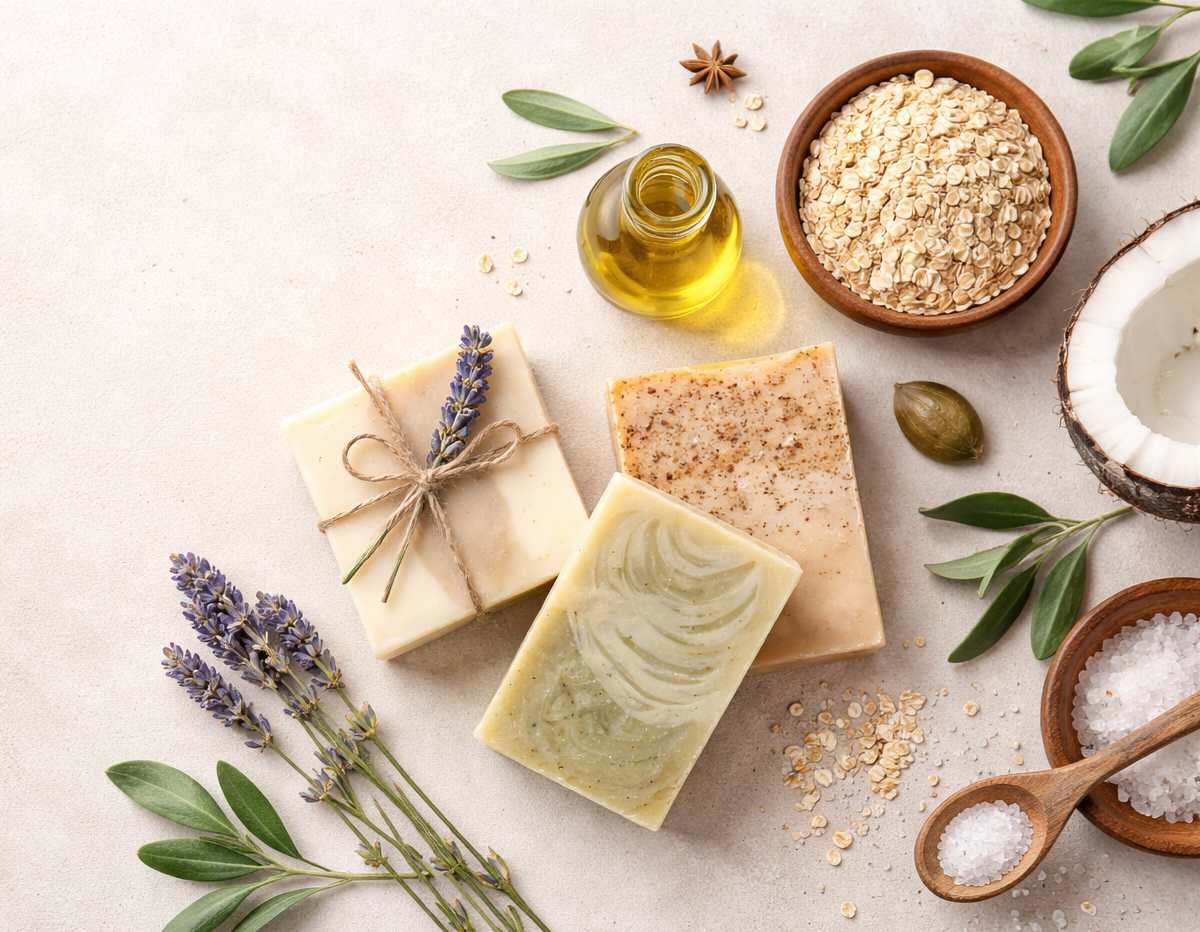
Today’s soap market spans from artisanal handcrafted bars to scientifically formulated liquid soaps and specialty bath products—but at its heart, the story remains one of basic chemistry applied to everyday life.
Why soap matters: beyond cleanliness
Soap is more than a cleaning agent; it has played a pivotal role in public health. Regular handwashing with soap dramatically reduces the spread of infectious diseases, a fact that continues to save lives globally.
From ancient clay tablets to luxurious artisanal bars, soap’s journey reflects our evolving relationship with hygiene, science, and culture!